How Often Should You Change Hot Tub Water? A Technician's Real Answer
The internet says every 3 months. Reality is more nuanced. Here's the formula spa technicians actually use to decide when it's time to drain.
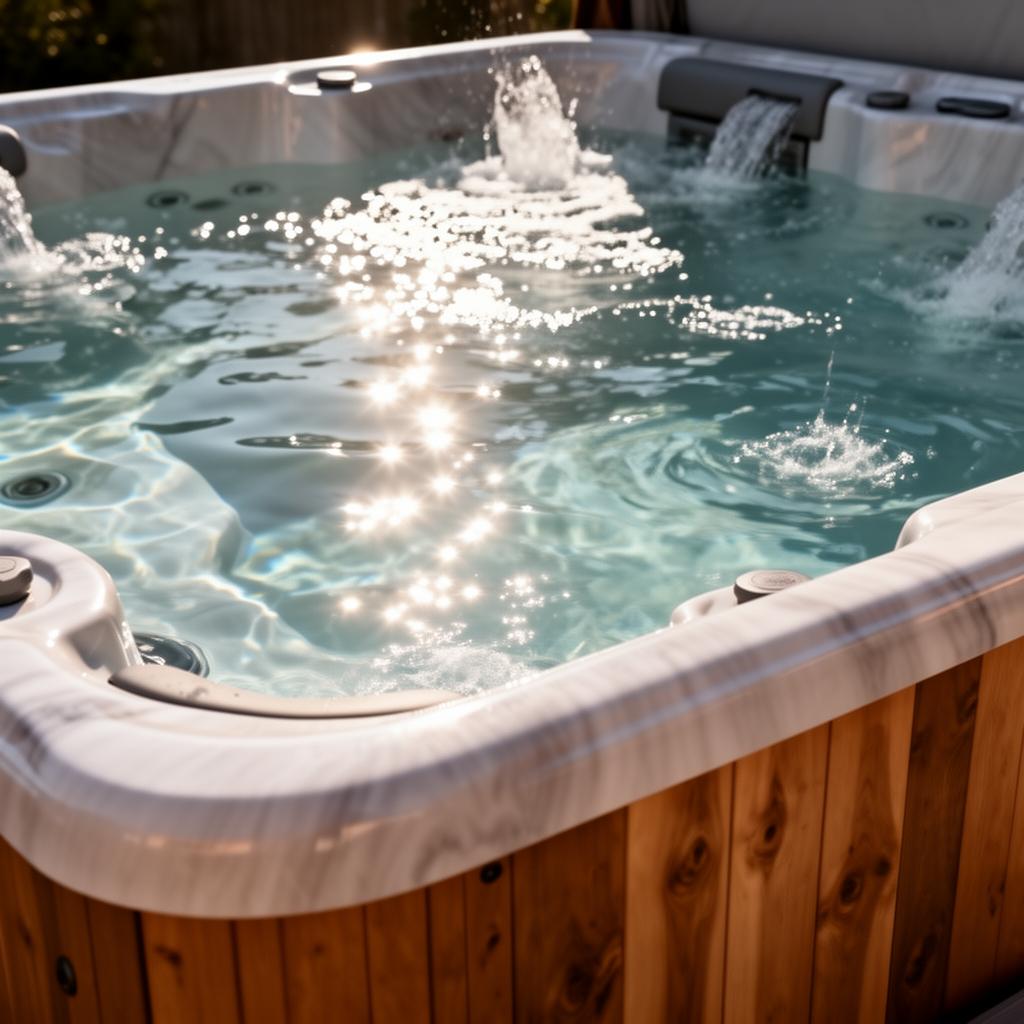
Ask ten hot tub owners how often they change the water and you'll get ten different answers, ranging from "every month" to "I've never done it." The honest answer from working spa technicians: most home spas should be fully drained, cleaned, and refilled every 3 to 4 months — but the right interval for *your* tub depends on a few specific variables that the generic "3-month rule" ignores.
This guide walks through the math we use on service calls, why skipping water changes ends up costing you a heater or a pump, and how to make every drain-and-refill last as long as possible.
The technician formula: gallons ÷ (bathers × 3)
The cleanest rule of thumb in the industry is the Water Replacement Interval (WRI) formula:
> Days between changes = Spa gallons ÷ (average daily bathers × 3)
A few real examples:
- 400-gallon spa, 2 people using it 4×/week: 400 ÷ (1.14 × 3) ≈ 117 days — about every 4 months
- 500-gallon spa, family of 4 using it 5×/week: 500 ÷ (2.86 × 3) ≈ 58 days — about every 2 months
- 350-gallon spa, single user 2×/week: 350 ÷ (0.57 × 3) ≈ 205 days — about every 6–7 months
The WRI captures what the calendar can't: bather load is what actually exhausts the water, not time. A spa used hard for parties twice a week ages its water faster than one a couple uses quietly every evening.
What "exhausted" water actually means
Water doesn't go bad on a single date. It accumulates four things that no amount of sanitizer can fix:
1. Total Dissolved Solids (TDS)
Every dose of chemicals, every drop of body oil, every speck of skin or shampoo residue adds TDS. Once TDS climbs above 1,500 ppm over the fill water, sanitizer effectiveness drops sharply — you'll need more chlorine or bromine to do the same job, and you'll feel it as a "flat" or "tired" water feel.
2. Cyanuric Acid (CYA) creep
If you use stabilized chlorine (dichlor), CYA builds up about 0.6 ppm per ppm of chlorine added. Above 80–100 ppm CYA, free chlorine becomes nearly useless even though your test strip reads fine. This is the #1 reason a spa "won't hold chlorine" on otherwise good chemistry.
3. Combined chloramines
These are the irritating, harsh-smelling byproducts of sanitizer reacting with sweat, urine, and organics. A spa that smells "chemically" is usually a spa that needs a drain, not more chlorine.
4. Carbonate scale precursors
Dissolved calcium and bicarbonate climb every refill (especially with hard tap water). At a certain point you get scale on the heater element — and that's where a missed water change turns into a $300 repair.
When to change water sooner than the formula says
Override the WRI and drain immediately if:
- The water has a persistent biofilm "musty" smell even after shocking
- You see cloudy water that won't clear within 24 hours of balancing
- You ran antibiotics, dye, or massage oil in the tub (residues bind to sanitizer)
- The spa sat for more than 2 weeks without proper sanitizer levels
- Anyone with a known skin infection or open wound used the tub
In all of these cases, no chemistry adjustment will salvage the water — drain it.
When you can wait a little longer
You can typically stretch the WRI by 20–30% if:
- You rinse and replace your filter on schedule
- You shower before soaking to cut body oils dramatically
- You add a weekly enzyme treatment to digest organics
- You keep a tight water-balance log (pH, alkalinity, calcium, sanitizer)
A well-maintained 500-gallon spa for two adults can often run a clean 5 months on one fill.
The drain-and-refill itself, step by step
Done right, a complete water change takes 90 minutes of attended time:
- Turn the spa off at the breaker. Never drain with power on.
- Pre-clean the plumbing. Add a line flush product, run jets for 20 minutes, then drain.
- Open the drain valve and let gravity do the first 80%. Use a submersible pump to finish.
- Wipe down the shell with a non-foaming spa surface cleaner — never household cleaners.
- Clean or replace the filter. A chemical soak monthly, replacement every 12–18 months.
- Refill through the filter housing (not the shell). This prevents an airlock in the pump.
- Restore power, prime the pump, and confirm flow before adding any chemistry.
- Balance in this order: alkalinity → pH → calcium → sanitizer. Wait 15 minutes between each.
Skipping the line flush is the most common reason "fresh" water gets cloudy within a week.
What happens if you wait too long
We pull heaters out every week that died from one of two things: dry-fire (a flow problem) or scale and TDS-driven corrosion from water that should have been changed two changes ago. A $400 element replacement costs roughly 8x what the water change would have.
Other long-term costs of stretched intervals:
- Pump seals that fail prematurely from gritty, abrasive water
- Topside controls that corrode from chloramine vapor
- A cover that yellows and stiffens from chemical off-gassing
- Acrylic shells that lose their gloss from high TDS attack
The 4-month default
If you don't want to do the math, every 4 months is a safe baseline for a typical 2-person household spa with average use. Mark it on the calendar, line up your filter rinse and chemistry refill at the same time, and you'll get years more life out of every part of the spa.
Need help with a drain, clean, and chemistry reset?
We do flat-rate drain-and-clean service that includes line flush, shell scrub, filter cleaning, fresh fill, and full chemistry balance — usually under 2 hours on-site. Call dispatch and we'll book you in.