
Hot Tub Won't Heat? 7 Things to Check Before Calling a Pro
About half of all 'won't heat' calls turn out to be one of these seven simple causes. Walk through this checklist before you spend a dollar.
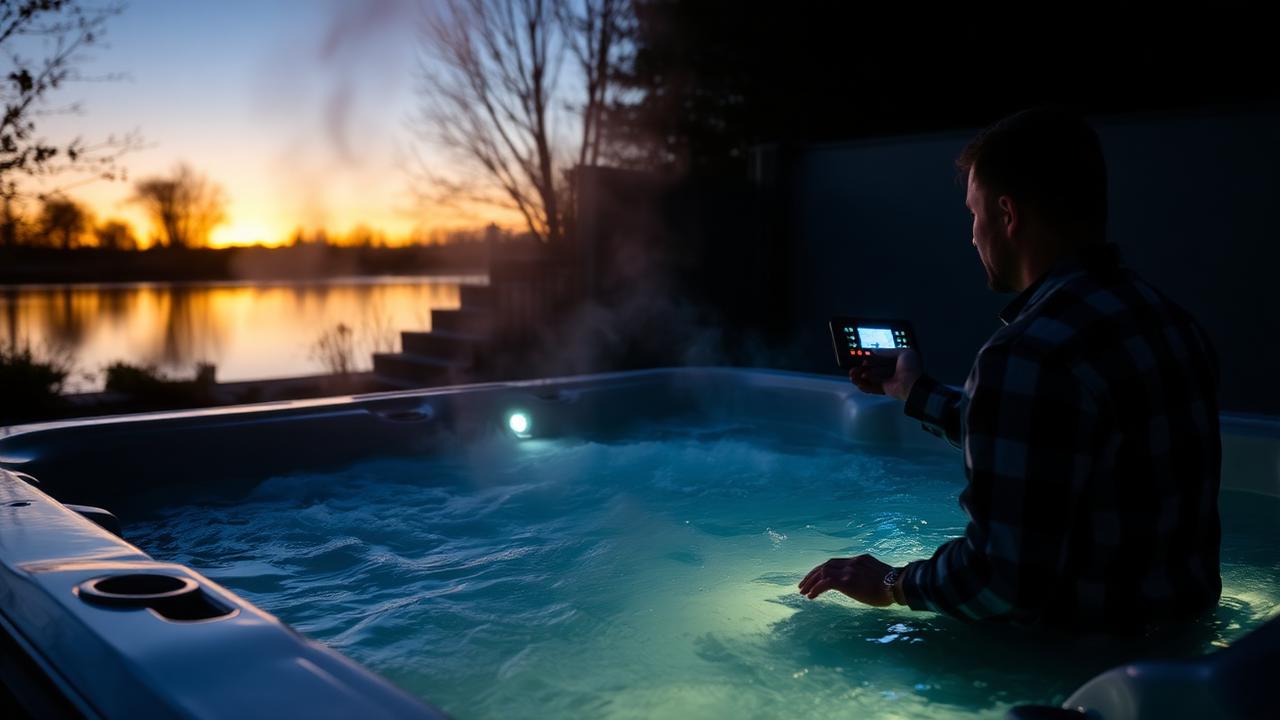
A hot tub that suddenly stops heating is one of the most stressful surprises a spa owner can run into — especially on a cold night. The good news: roughly half the "won't heat" calls we run turn out to be a homeowner-fixable issue that costs nothing and takes ten minutes.
Before you book a service call, run through these seven checks in order. They're the same first-pass checks our own technicians do when they arrive.
1. Check (and rinse) your filter
A clogged or dirty filter is the #1 cause of "no heat" complaints. Spas are designed with a safety circuit: if water flow through the heater drops below a threshold, the pressure switch opens and the heater shuts off to prevent dry-fire.
Do this: Power the spa off at the GFCI, pull the filter, and rinse it thoroughly with a garden hose. Hold the cartridge at an angle so debris flushes out from between the pleats. If the filter has been in for more than a season, replace it — they're $20–$40 and cheaper than a service call.
Filters should be rinsed weekly and chemically soaked monthly.
2. Check the water level
Water below the highest jet means air in the lines. The pump can't draw a prime, the heater sees no flow, and the safety circuit shuts heating off. This is especially common after a partial drain, a windy day, or heavy use that splashed water out.
Top the tub up to the fill line, restore power, and give the pump 60 seconds to prime. You should hear and feel a steady stream from the jets within a minute.
3. Check the temperature setpoint
It sounds obvious, but kids, guests, and accidental button presses bump topside controls constantly. Confirm:
- The setpoint is above the current water temperature
- The spa isn't locked or in standby mode
- No "screen lock" indicator is active
If the setpoint reads "—" or a flashing value, you've likely got a topside panel issue, not a heater problem.
4. Check the mode (Standard vs. Economy vs. Sleep)
Most modern spas have three operating modes:
- Standard: heats whenever the temp drops below setpoint, 24/7
- Economy: only heats during programmed filter cycles
- Sleep: only maintains within ~20°F of setpoint, mostly during filter cycles
If someone switched the spa into Economy or Sleep mode, the heater is doing exactly what it's been told to do — just not when you want it. Switch to Standard and wait 15 minutes for the heater to engage.
5. Check the GFCI breaker
Walk to your spa disconnect box (usually within 5 feet of the spa) and inspect the GFCI breaker. If it's tripped:
- Reset it once and watch what happens
- If it holds, you may have had a one-time nuisance trip — common after storms
- If it trips again within seconds or minutes, stop
A repeating GFCI trip means there's a real electrical fault — usually a failed heater element, a wet control board, or a damaged pump motor. This is the one item on this list where you should call a pro instead of troubleshooting further. Repeated resets can damage the breaker itself.
6. Read the error code on the topside display
Modern spas tell you exactly what's wrong if you know the code. The most common ones:
- OH / OHH / OHS: Overheat — usually a stuck pressure switch or failed temp sensor
- HL / HFL: High-limit triggered — flow problem or scaled heater
- FLO / FL1 / FL2: No water flow detected — filter, pump, or pressure switch
- SN / SnA / SnB: Sensor fault — temp or high-limit sensor needs replacement
- dr / dry: Dry-fire detected — pump didn't prime
- COOL / ICE: Spa is heating but currently colder than safe minimum
Write down the exact code before you call. Our technicians can quote roughly 80% of repairs from the code alone.
7. Listen for the circulation pump
The heater can only fire when water is moving through it. That means either your circulation pump (on most newer spas) or jet pump 1 on low speed has to be running while the heater is on.
Open the equipment bay door and listen. You should hear a soft hum within a couple feet of the cabinet. If you hear nothing — or a grinding, growling, or buzzing sound — the pump has likely seized or its capacitor has failed. That's a real repair, but a relatively common and inexpensive one.
When it's time to call a professional
If you've worked through all seven and the spa still won't heat — or if any of these are happening — call a pro:
- Repeating GFCI trip after one reset
- Burning smell from the equipment bay
- Visible water around the heater housing or pump
- Any error code starting with SN, HL, OH, or dr
- Pump runs but heater never engages
These almost always mean a failed heater, failed sensor, or a control board issue — none of which are safe DIY territory at 240 volts.
How much will a professional repair cost?
Most no-heat repairs land in the $180–$475 range depending on the cause:
- Pressure switch replacement: $180–$250
- High-limit sensor replacement: $200–$280
- Heating element only: $180–$325
- Full heater assembly: $250–$475
- Pump replacement: $400–$700
Reputable shops will flat-rate the diagnostic, waive it if you approve the repair, and back the work with a written warranty.
The 10-minute payoff
Two-thirds of our customers who try this checklist before calling solve the problem themselves — usually at step 1, 2, or 4. That's a saved trip fee, a faster fix, and no scheduling headache. And if you do end up needing a pro, you've already pre-diagnosed the system enough to get an accurate phone quote.
If you're stuck after step 7, give us a call. 24/7 dispatch, written quotes, and most jobs done same-day.