
Hot Tub GFCI Keeps Tripping: 8 Causes and How to Diagnose Each One
A GFCI that keeps tripping is the spa's way of telling you there's a real electrical fault. Here's how to diagnose the 8 most common causes.
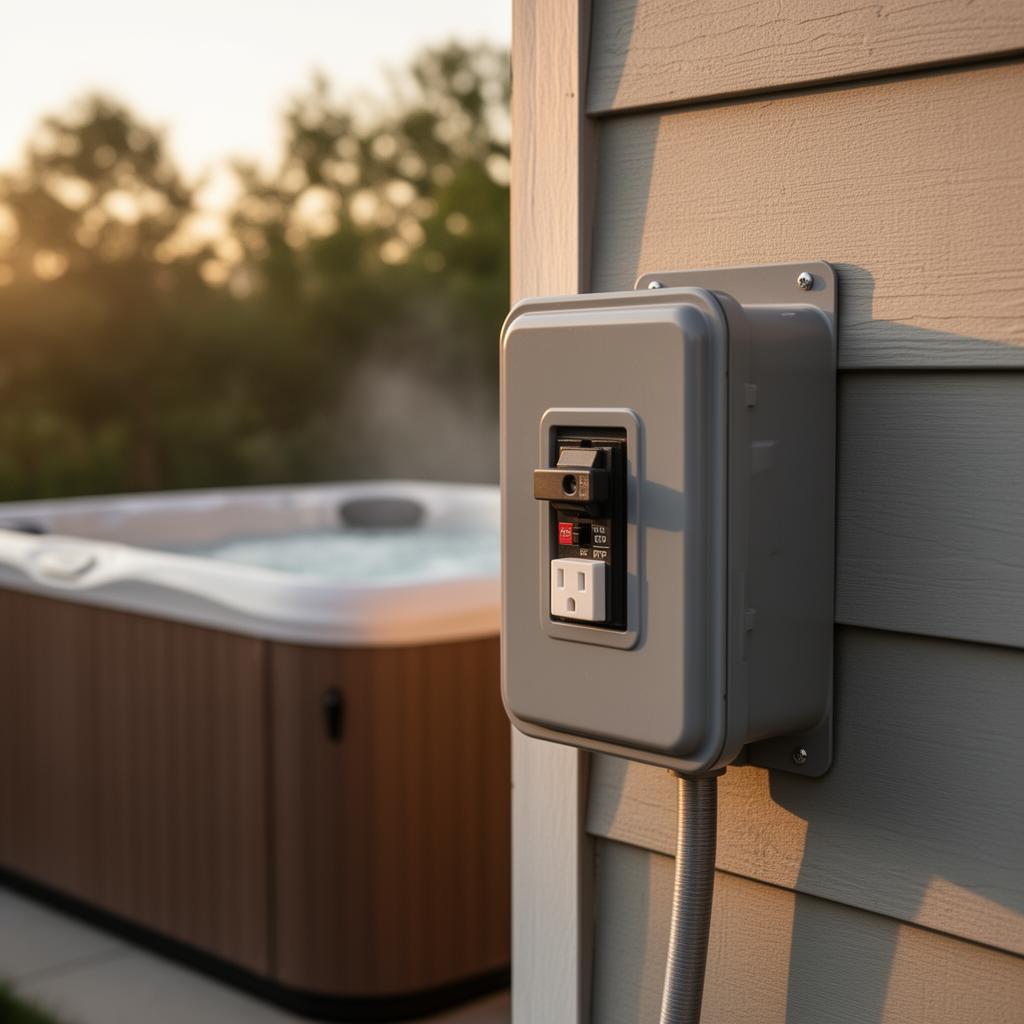
A GFCI breaker isn't malfunctioning when it trips — it's doing its job. The breaker is sensing a current imbalance somewhere in the spa, and shutting power off before that imbalance becomes a shock hazard or a fire. Resetting it over and over without finding the cause is one of the most dangerous things a homeowner can do with a hot tub.
This guide walks through the eight causes we actually find on service calls, from most to least common, with what to look for on each.
First: reset rules
Before any diagnosis:
- Reset the GFCI once. If it holds, monitor it for a day before assuming it was a nuisance trip.
- If it trips again within seconds, the fault is in the heater, pump, or control board — stop resetting.
- If it trips after 5–60 minutes, it's usually a heat-related or moisture-related fault.
- Never jumper, bypass, or replace a GFCI with a standard breaker. That's a code violation and a real safety hazard.
1. Failed heater element (the most common cause)
When a spa heater fails, the most common failure mode is a tiny pinhole in the heating element that allows water to contact the 240V element wire. That creates a ground fault every time the heater energizes — and the GFCI trips within seconds of the heater cycling on.
Symptom: Trips reliably when the spa is set to heat, holds when heat is locked out via topside controls. Diagnosis: Megger test the element to ground (>1 MΩ is healthy, near 0 is failed). A technician can do this in 5 minutes. Fix: Replace heater element or full assembly, $180–$475 installed.
2. Water inside the control box
Spa control packs live in the equipment bay where humidity is constant. Over years, condensation can pool inside the box, drip onto the relay board, or corrode terminals. The trip pattern is usually random, not tied to heating cycles.
Symptom: Random trips, often more frequent in humid weather or after rain. Diagnosis: Open the control box (power OFF) and look for discoloration, white powder, or visible moisture. Fix: Dry out and reseal in mild cases; replace the board if corrosion has reached traces.
3. Failed pump motor
Pump motors fail in two ways that cause GFCI trips: the start capacitor shorts, or the motor windings break down and leak current to ground.
Symptom: Trip happens the moment a specific pump speed engages. Diagnosis: Disconnect each pump one at a time and run the spa. The pump that lets the breaker hold is the bad one. Fix: Pump replacement, $400–$700 installed depending on horsepower.
4. Damaged power cable or connection
Spa power runs through the disconnect, into the cabinet, and to a terminal block on the control pack. Anywhere along that path, insulation damage, water intrusion, or rodent damage can cause an intermittent ground fault.
Symptom: Trips that get worse in wet weather, or shortly after the spa was moved. Diagnosis: Inspect the full cable run with the breaker off; look for cracked insulation, scorch marks, or chewed sections. Fix: Replace damaged section, $150–$300.
5. Burned-out light or transformer
Spas use a 12V transformer to step down the cabin power for LED lights. When the transformer fails wet, it can drag current to ground.
Symptom: Trip happens when the light is turned on, or randomly if the light circuit has shorted internally. Diagnosis: Disconnect the light at the transformer; if the breaker holds, you've isolated it. Fix: Replace transformer ($40–$80) or light assembly ($80–$200).
6. Failed ozonator
Ozonators have an internal high-voltage transformer that can fail wet, especially in spas where the check valve was replaced incorrectly and let water back into the unit.
Symptom: Trip pattern matches your filter cycle (since the ozonator runs with the circ pump). Diagnosis: Disconnect the ozonator at the control pack; if the breaker holds, it's the culprit. Fix: Replace ozonator, $90–$220 installed.
7. The GFCI itself has failed
GFCIs are mechanical devices and they wear out. After 5–10 years, especially in outdoor disconnects exposed to weather, the trip circuitry can become hypersensitive and trip on legitimate microsurges from your spa starting up.
Symptom: Trips with no visible pattern; spa otherwise seems fine; trips on test even with the spa disconnected. Diagnosis: Test with a clamp meter to verify there's no actual current imbalance during a trip. Fix: Replace the GFCI breaker, $80–$180 with a licensed electrician.
8. A neutral-ground bond in the wrong place
Spas are wired with isolated neutral and ground that bond only at the main panel. If a contractor accidentally bonded them at the spa disconnect or inside the spa, the GFCI sees a parallel return path and trips on every test.
Symptom: GFCI trips on first energize, can't even be reset. Diagnosis: A licensed electrician verifies separation of neutral and ground at the disconnect. Fix: Re-wire the disconnect; this is not a DIY job.
What you should not do
- Don't replace the GFCI with a standard breaker to "get the spa working." It's illegal under NEC and the next ground fault will be unprotected.
- Don't keep resetting more than twice. Each reset stresses the breaker contacts and can mask a worsening fault.
- Don't try to test heater elements with a regular ohmmeter. You need an insulation tester (megger) to find micro-leaks.
When to call a pro
If the GFCI trips twice on the same day, stop and call a spa tech. A diagnostic typically takes 30–60 minutes and the trip pattern alone (timing, frequency, weather correlation) tells us 80% of what we need to know before opening the cabinet.
Dispatch is open 24/7, written quotes, no diagnostic fee when you approve the repair.